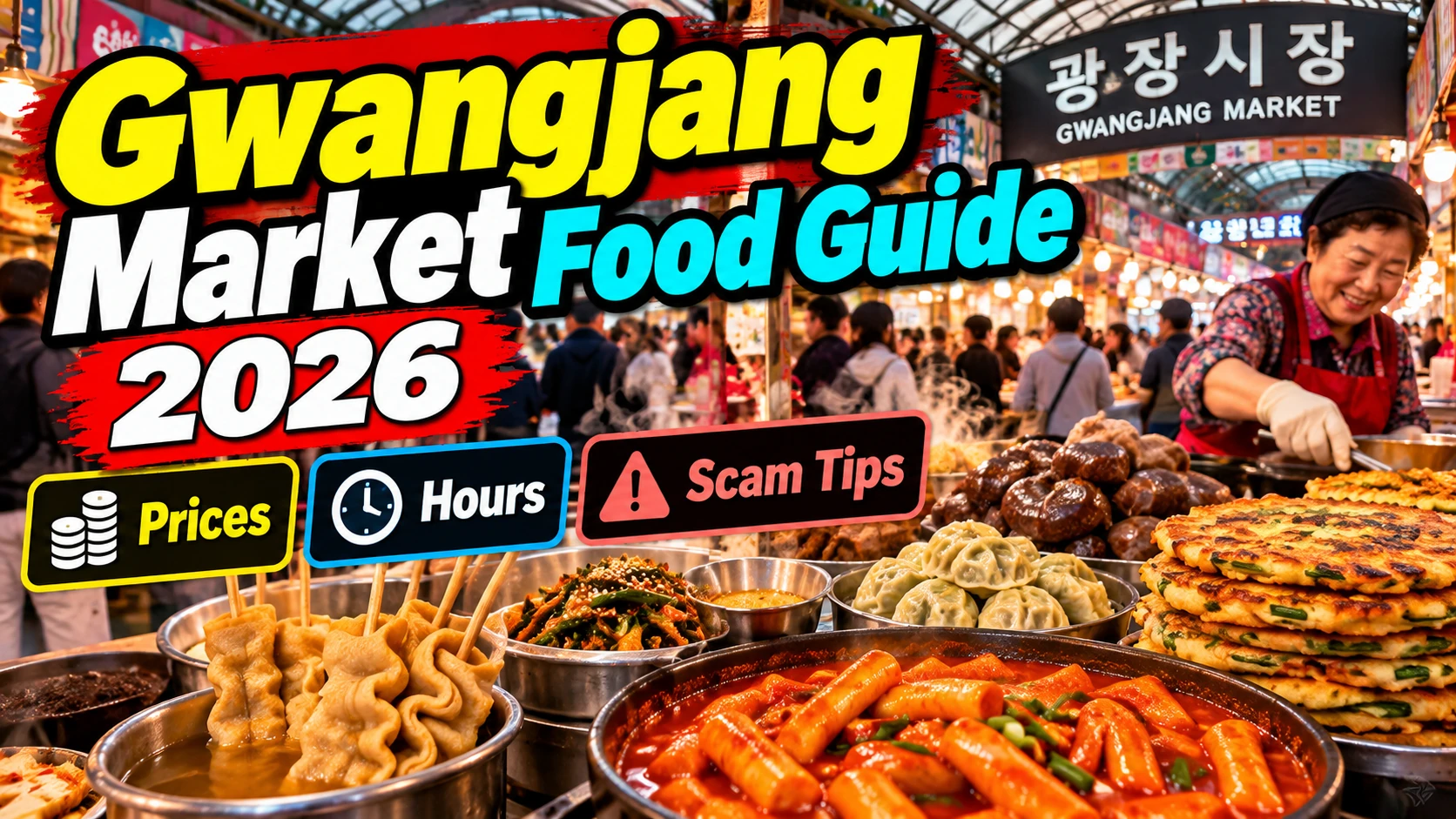
still worth the queue?
Locals have been quietly steering friends away from Gwangjang Market.
One 2026 travel update says that in late 2025 a popular Korean YouTuber filmed himself being overcharged at a stall, and that many Seoulites now head to Mangwon or Gyeongdong market instead.
So why would a first-time visitor still go? Because the food at the best stalls is cheap, the setting is famous for good reason, and a few simple habits keep you safe.
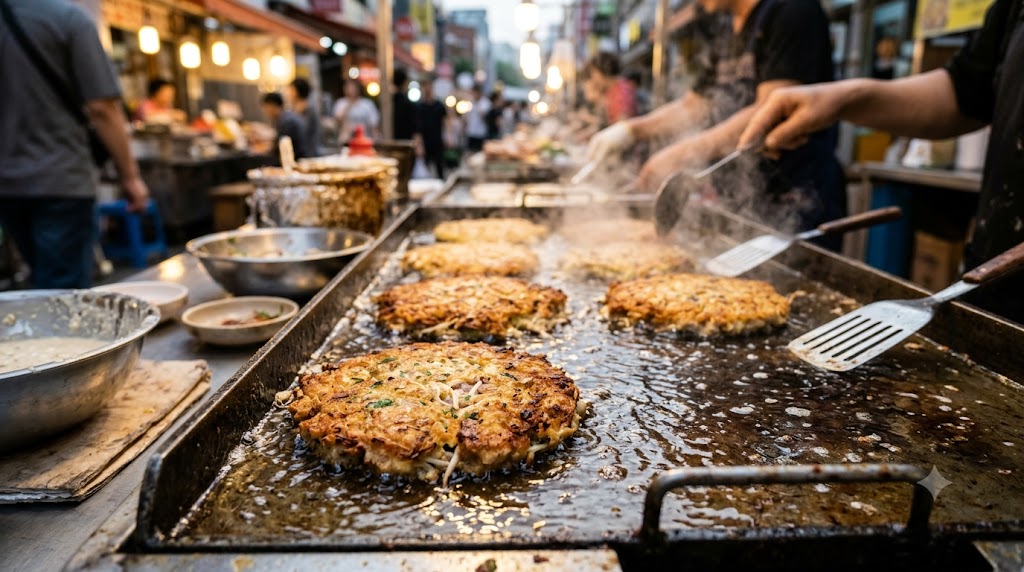
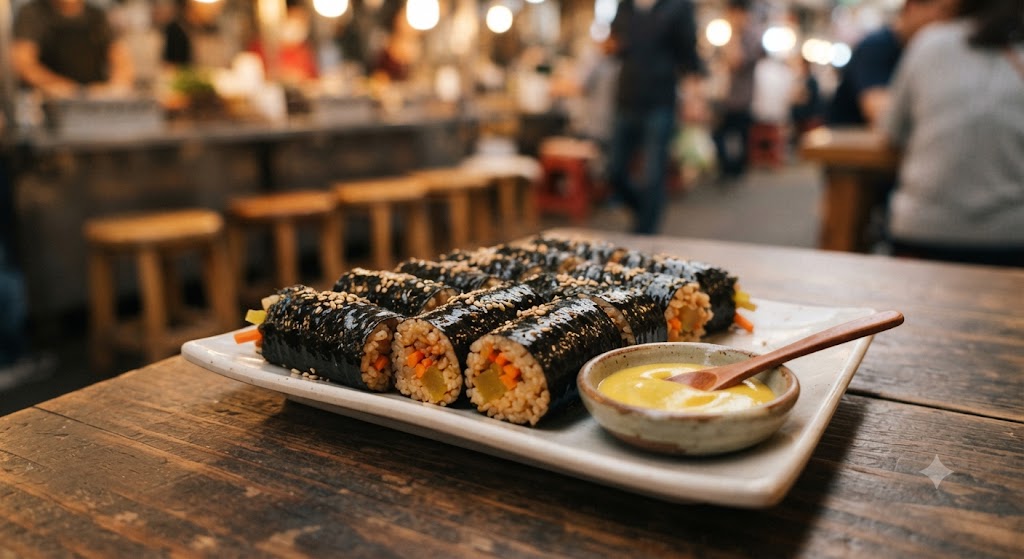
Go on a weekday around 18:00 with 30,000 won in small bills per person. Take Line 1 to Jongno 5-ga. Check the price before you sit. Share plates, start with bindaetteok, then mayak gimbap.
Gwangjang Market hours and how to get there
Gwangjang opened in 1905, and two separate guides call it Seoul’s oldest traditional market and the first permanent indoor market in Korea.
The nearest station is Jongno 5-ga on Line 1, a one-minute walk by one guide, though the guides disagree on the exit: one says Exit 7 or 8, another says Exit 8 or 9.
Check the signs when you surface and follow the crowd.
These can both be true: shops and some stalls follow day hours while food stalls stretch into the evening.
The practical answer is to go between 17:00 and 20:00 for the full atmosphere, call ahead if a specific stall matters, and expect that some stalls close on Sundays, as one guide notes.
What to eat, and what it costs
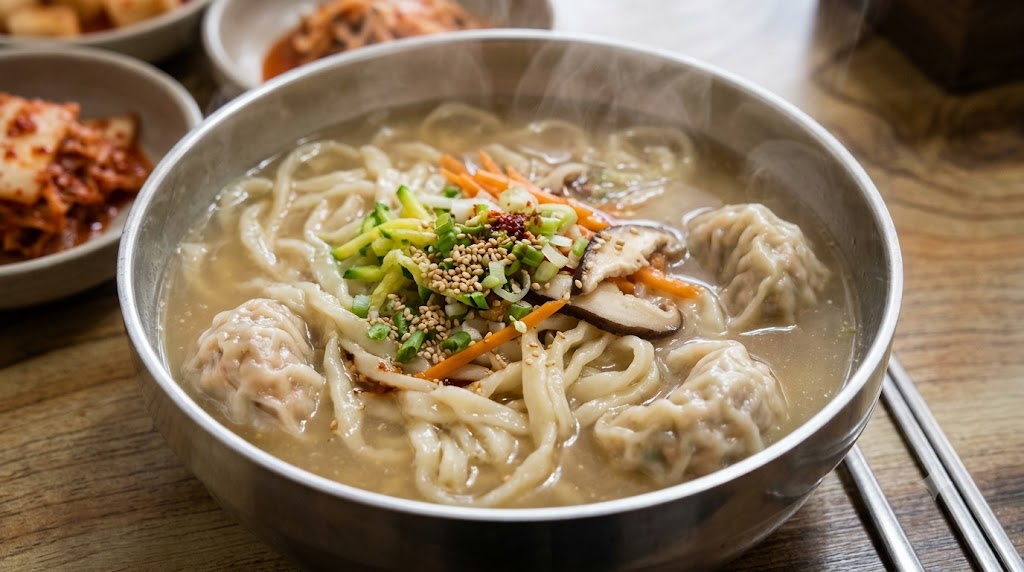
Beyond those, the guides also mention hand-cut kalguksu noodles, with 6,000 to 8,000 won described as a typical meal price, plus mandu dumplings, hodo-kwaja walnut cakes and a garlic cream puff stall.
Gohyang Kalguksu, run by Cho Yonsoon, appeared in Netflix’s Street Food Asia, and one writer waited about 30 minutes in line.
A bottle of makgeolli runs 4,000 to 5,000 won, so a pancake and a bottle makes a proper evening snack for two.
Bindaetteok 5,500 + mayak gimbap 5,000 + tteokbokki 5,000 + kalguksu 7,000 + half a bottle of makgeolli 2,250 = about 24,750 won each, which fits the 30,000 won per person that one guide suggests.
How to avoid being overcharged
The same July 2026 update warns that some vendors add hidden costs or serve smaller portions than advertised, and that Gwangjang has become more tourist-oriented.
None of that means every stall is a trap, but it means you should act like a local.

Best time to go, and what to skip
One guide says the quietest hours are 9 to 11 a.m., the lunch rush is 12 to 2 p.m., and the hardest time to find a stool is 5 to 9 p.m.
Its advice for a first visit is around 6 p.m. on a weekday, and I agree it is the best compromise between atmosphere and elbow room.
Another guide estimates about 65,000 visitors a day, which is a rough blog estimate, not an official count.
Do not drive.
Jongno has almost no street parking, and the subway drops you at the door.
Tipping is not customary, and tissues are often rationed, so bring your own.
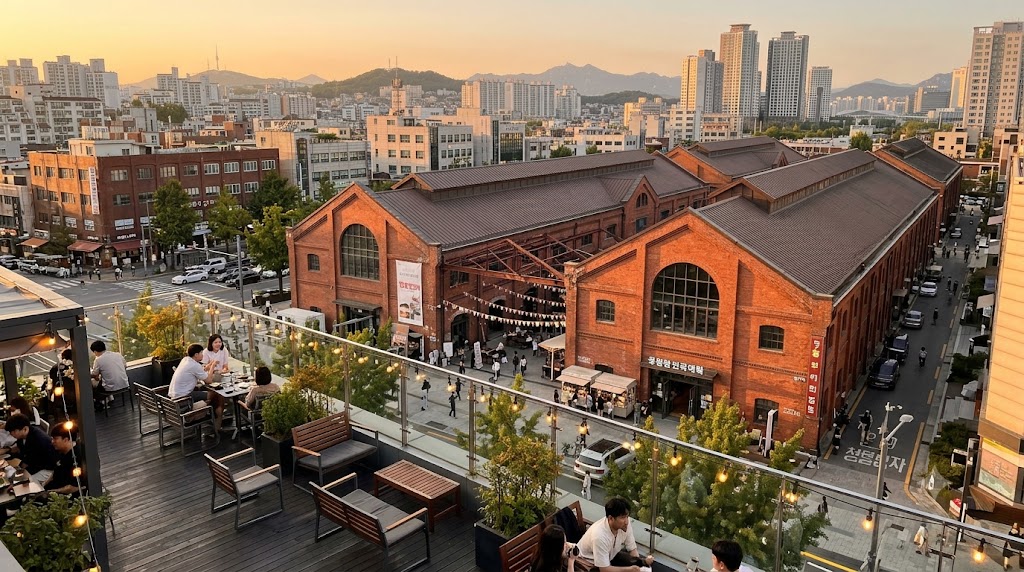
The market also has a Starbucks in a restored red-brick warehouse with a rooftop terrace, which one guide says donates 300 won per item sold to local community projects.
It is a handy restroom-and-rest stop when your feet are done.
More than a food court
It helps to remember what the market was built for.
One guide says Gwangjang began as a textile and silk market, which is why the upper floor still has hanbok shops, and why it is also known for selling burial garments.
Eating here is a modern layer on top of a working traditional market, so be gracious about photos and do not block aisles with a tray.
Walking distance from Insadong, Myeongdong and Dongdaemun is another reason to fold it into a bigger day.
A natural sequence is a late-afternoon walk along Cheonggyecheon Stream, dinner at the market, and a stroll toward Dongdaemun afterwards.
Plan at least two hours if you want to sample several stalls without rushing.
If it feels too crowded or too touristy
The July 2026 update says many locals now go to Mangwon or Gyeongdong Market.
I have not verified prices there, so treat them as ideas to check on a map rather than a recommendation.
What I can say is that a smaller market is easier on first-timers who want to practise ordering in Korean.
Outside tourist stalls, menus are often Korean-only, and diners call out a polite yeogiyo to get a server’s attention.
If you want less spice, one guide suggests asking for a milder version by saying an maep-ge, meaning not spicy.
If you have dietary limits, ask before you sit, because raw beef, pork and seafood appear in many dishes and I could not confirm ingredients stall by stall.
A one-hour route that works
Frequently asked questions
'먹거리 여행' 카테고리의 다른 글
| 벌교 꼬막 제철 2026, 참꼬막 20kg 80만 원 시대의 먹는 법 (0) | 2026.11.01 |
|---|---|
| 속초 대게 가격 2026, 1kg 8만 원 vs 노량진 4만 5천 원대 (0) | 2026.10.31 |
| 구룡포 과메기 제철·가격, 20마리 두름 2만 원대 먹는 법 (0) | 2026.10.29 |
| 부산 어묵, 같은 한 꼬치인데 1,200원도 3,000원도 있습니다 — 삼진·미도·고래사 3곳 동선과 가격 확인법 총정리 (0) | 2026.10.26 |
| 밥도둑은 게가 아니라 갓김치였다? 여수 게장백반 가격·식당·먹는 순서 완전 정리 (0) | 2026.10.22 |


